Tags
Ancient Woodland, Brash clearance, brash removal, Catbrook wood, Ninewells Wood, small woodland felling, Welsh woodland, Woodland Management
Clear it…… but be prepared for another round of damage .
After our Pines were felled, we were left with vast amounts of brash. So much that you could not walk in a straight line, there were huge no go areas and so it really had to be cleared. In places it was about 50cm to 75cm deep, so regeneration or planting was out of the question. It will break down eventually but how long is eventually? It will provide a microhabitat for creatures to hide in, to nest in and to hibernate in, also it will provide a source of food for some insects. But, how much microhabitat do these creatures need? The amount on offer was far in excess of their needs.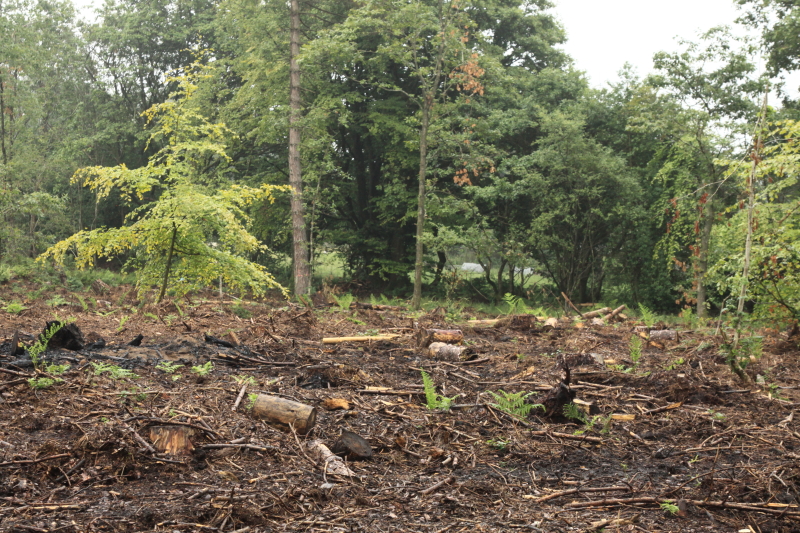
So the brash man was set loose, and I was informed that the person we had got along was a particularly good and sympathetic operator. So he would do his best to preserve the few deciduous trees which had survived the felling process, and that he would not cause more damage than was absolutely unavoidable.
After four days he had cleared a lot of brash, he had piled up massive amounts which then get burnt. Most of the deciduous trees did survive, and now you can walk in a straight line…..more or less.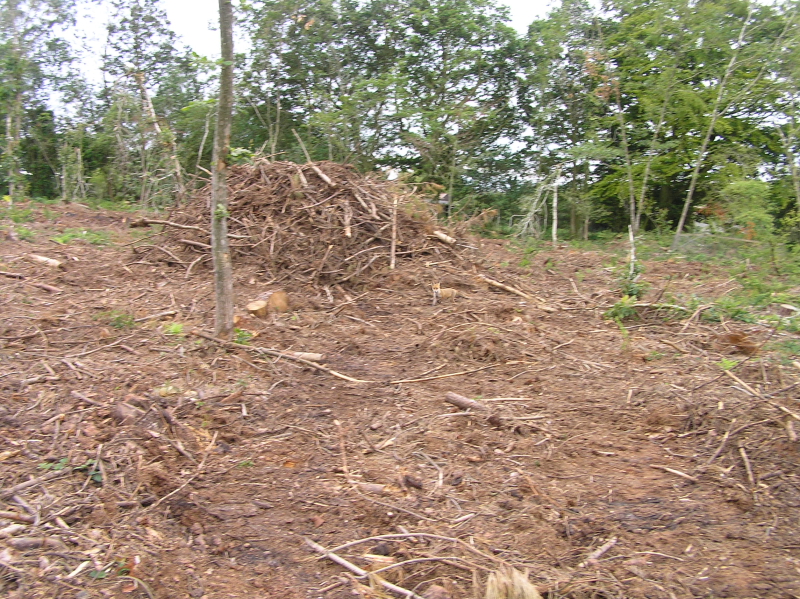
The wood piles do produce a massive bonfire and when several are burning at the same time the amount of smoke is considerable. I visited the wood one day when the fires were burning quite strongly and you could see the smoke drifting right across Cleddon bog and I have been told you could smell it in Trellech which is a couple of miles away.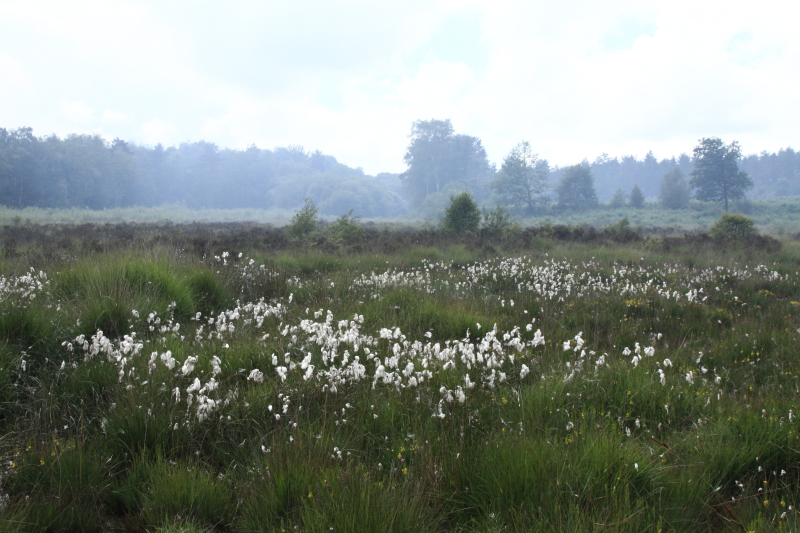
The immediate neighbours did suffer a bit, especially when the wind changed direction and took thick smoke directly towards them…Sorry. As a result the brash man did not light any more fires and I am left with about 16 huge piles of brash, I may light one or two of them at some point in the future but only when the wind is set in a direction away from any neighbours. This is a direction which the wind does not seem to blow in very often so they may be left for a very long time.
When the fire eventually goes out which can take a week or so you are left with a huge area of ash which not a lot will grow in so it has to be distributed over a wide, ish area. This will have a positive effect because the ash is alkaline and will help offset the acidic nature of the soil which will have increased with the last 100 years of conifers growing there.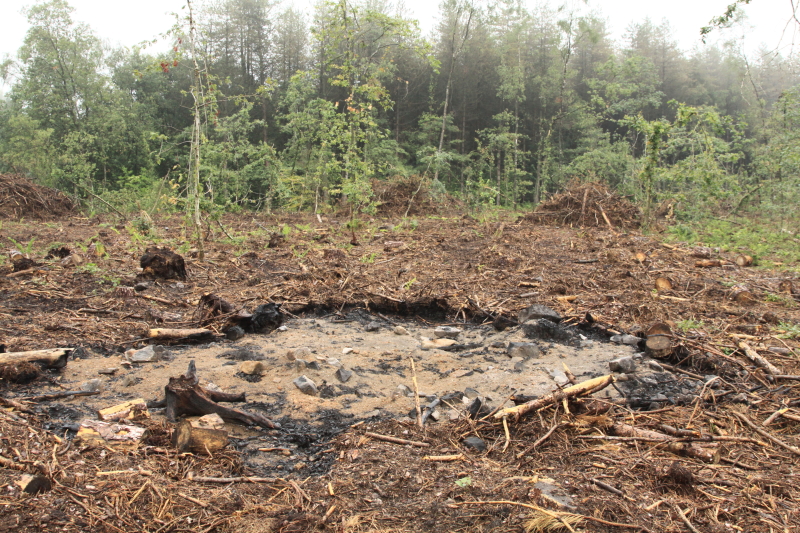
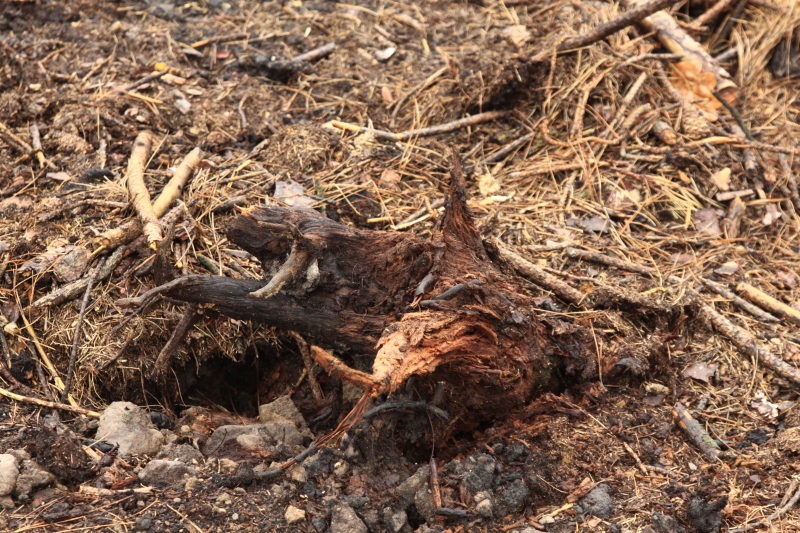 The down side of brash clearance is that it causes further disruption to the diversity of the forest. Mosses and ferns, wild flowers and grasses do not stand a chance, they a scrapped up along with all the leaf litter, twigs and branches. The other downside is that despite having removed 80% or 90% of the brash, the 10% or 20% that remains is still a considerable amount and the forest floor looks very uneven and it looks a real mess. Also it brings up the rotted stumps and roots of the trees that were felled back in the 1960’s, they are too rotted down for me to identify but were almost certainly some species of conifer.
OK the remaining brash will rot down but I suspect not for some time, so I have been out with my rake and wheel barrow ‘tidying up’. I know it’s not really a forestry activity but I want a ‘nice’ woodland where the forest floor is even and looks like the forest floor of an ancient woodland, not a recently felled pine plantation. So this is what 2 days of raking and clearing produces, which means clearing the entire wood will probably be completed in 2020 roughly.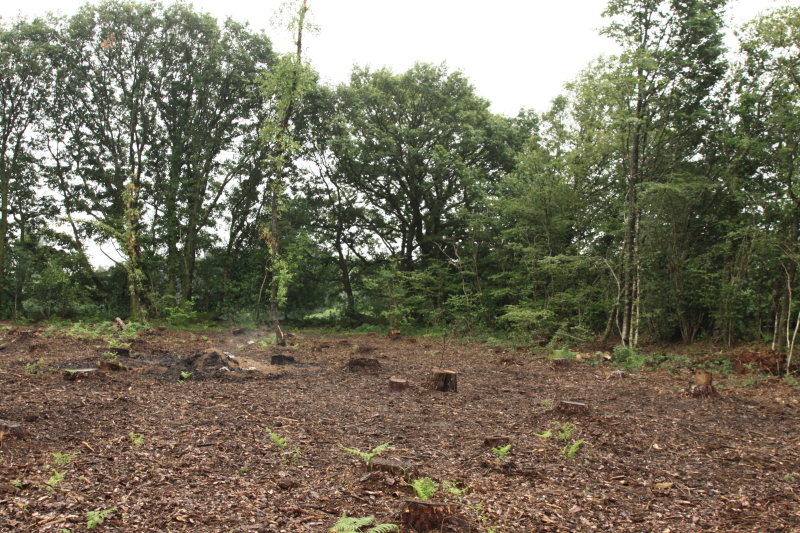
So now I think the wood has had all the damage the felling and associated activities can throw at it. Forestry really is a most destructive activity, it is amazing that anything survives, but nature is just slightly better than what we can chuck at it, thankfully.
 Ninewells Wood
Please do not burn wood – it is the worst form of air pollution. Just leave piles to rot down, great habitat and it will add nutrients back to the soil
You are right burning releases the CO2 but so does rotting it is the same amount just a slower process.
I don’t think it works like that because usually decay process is so slow that dead wood locks away carbon for many years and there is a great benefit to this instead of releasing it all in one go through burning. The particles in wood smoke are also very harmful to human health and wildlife as well. This article explains the role that deadwood has ecologically as well Deadwood in Woodland – British Habitats – Woodland Trust So maybe clear some brash and pile it up or use sustainable disposal to recycle it as an alternative to burning (very harmful all round).