I suppose the first question is to fell or not to fell and the answer to that is that we definitely do not want to clear fell. Otherwise we would end up with and open area, not a woodland and then we would have to replant and in twenty-five years time we might have something that begins to vaguely resemble a woodland and by then I would be very old and so that is not going to happen.
I would like to fell a proportion of the larger trees, many of them are between 14 inches and 16 inches in diameter and fairly tall.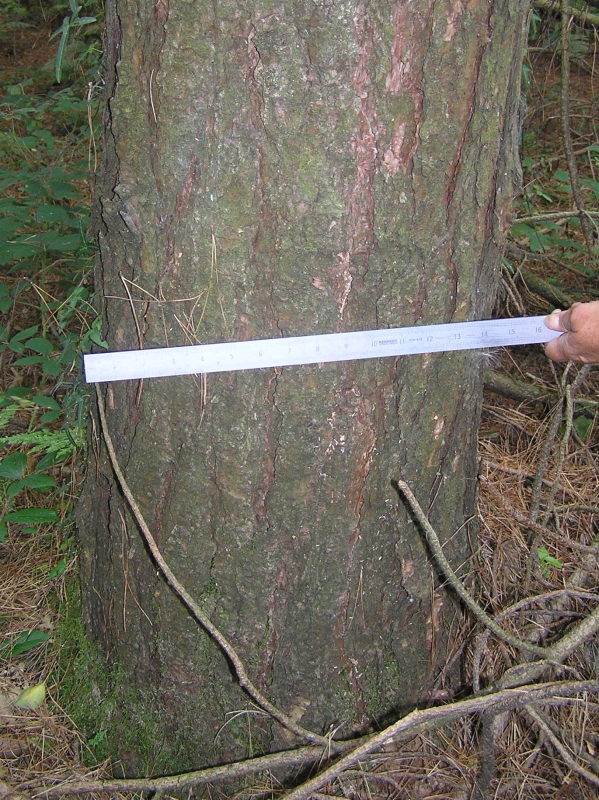 I counted up the side branch whorls on one that we have recently felled and it showed that the trees are about 50 years old, not 40 as I formerly thought. I would aim to gradually reduce the number of conifers over the next 20 or so years. A few will be, indeed are being removed for fire wood. These will be the very small ones which are easier to cut up and use. So lets say we remove a third of the trees in one hit, then the small Oaks and Beech which are already there can try to grow on and replace the pines. However are there enough of them and how many will remain after about 250 pines have been felled and removed. Inevitably some damage will be done. If there are very few then maybe some restocking will be needed.
When I was at the recent CONFOR exhibition we were informed that the established view is that restocking should achieve 1000 trees per acre and that on the continent even greater numbers are advocated. The idea behind this is that after some years the trees will have grown up straight and the most vigorous ones can be retained and the others thinned out. OK from a commercial point of view. This is a copy from the forestry Commission website.
Tree Establishment
Now if you are trying to restore an ancient woodland site I have two problems with this strategy.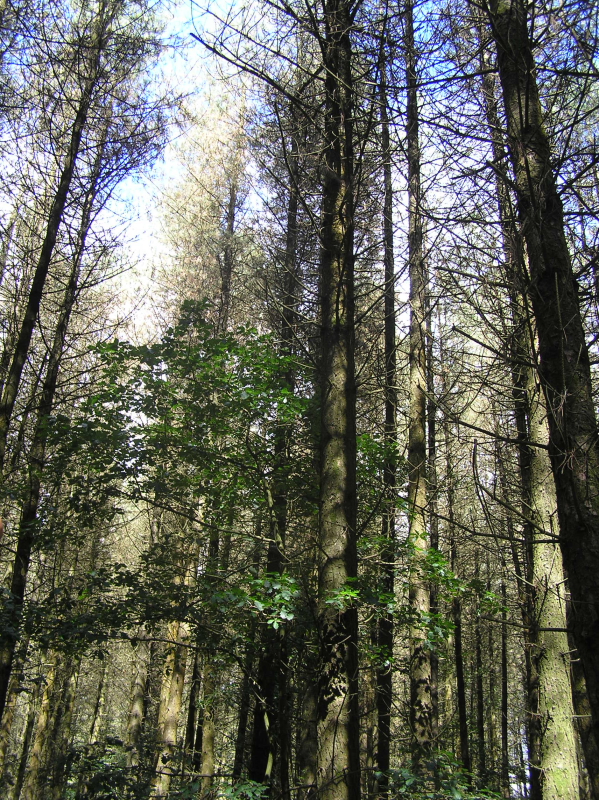 First of all importing young trees from somewhere else will introduce individuals which are genetically not so well suited to the local environment. I understand that suppliers of young trees will ensure the provenance and can supply trees from roughly the same geographical location as you are planting them in but it will not be that close a match.Secondly a natural woodland would not have tall straight oaks and beeches fit for the wood yard, they would be spreading and multi branched and more fit for the local fauna and indeed flora such as lichens and mosses that are more likely to colonise an ancient woodland oak rather than a plantation Oak.
So I think that the strategy should be a staged clearance of the Pines, natural regeneration of broad-leaved trees, this partly by the increased growth of what already exists and then if necessary by the collection of seeds locally and planting these up in pots and then transplanting into the wild. and only if this is not an option by the purchase of seedling trees and planting these in a low density so that they can grow naturally.
Incidentally it is not that difficult to grow trees from locally collected seeds. Some years ago I had a business called wedding tree favours and we grew thousands of trees from seed. Some seeds need cold treatment before they will germinate, such as ash, beech and silver birch but oaks are very easy, just plant them and up they will come, you do need to keep squirrels, mice and rats away from them but apart from that it could not be easier.
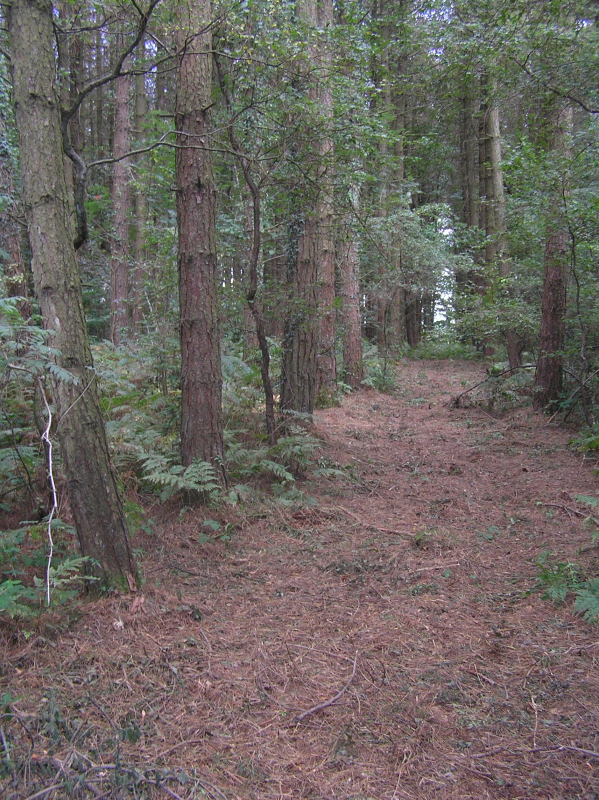
Finally here is a photo of our path which has only been cut through for about 3 weeks but is already beginning to look the part.