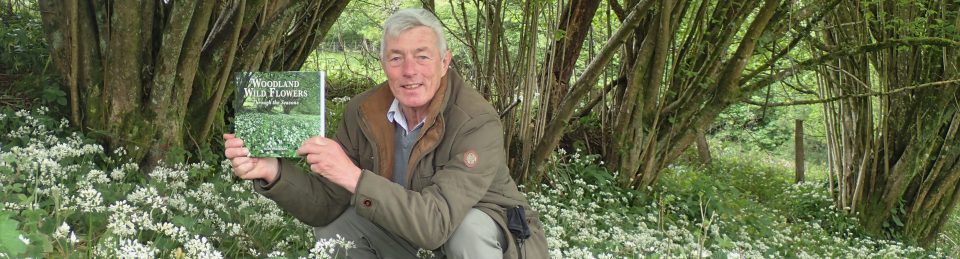
Its quite easy to grow most native trees from seed, its slightly slower than buying saplings, but it is much cheaper, indeed its almost free, and if you collect your own seed then you know where your seeds have come from. I collected, with help from my wife about 2,000 Beech masts last autumn, we collected most of them from another area of Ninewells wood and some from a picnic area about half a mile away.
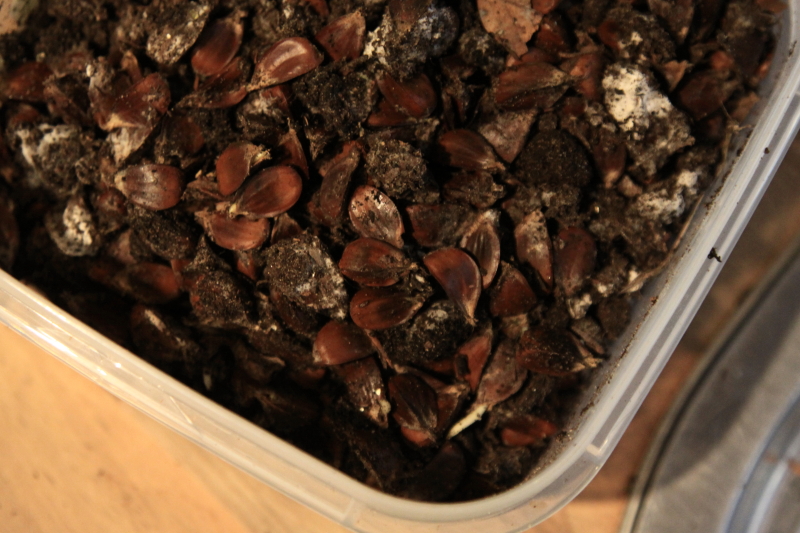
Box of seeds with some having germinated
It is essential to know the right way to treat the seeds of each tree species. There are web sites which tell you what to do. Quite a lot need a period of cold before they will germinate. In the case of beech it’s quite easy, just put them in a plastic food container with a little moist but not wet compost and put the container into the fridge, (taking care to ask permission from your wife). Leave them in the fridge and start to check them from mid January onwards. They will germinate in the fridge.
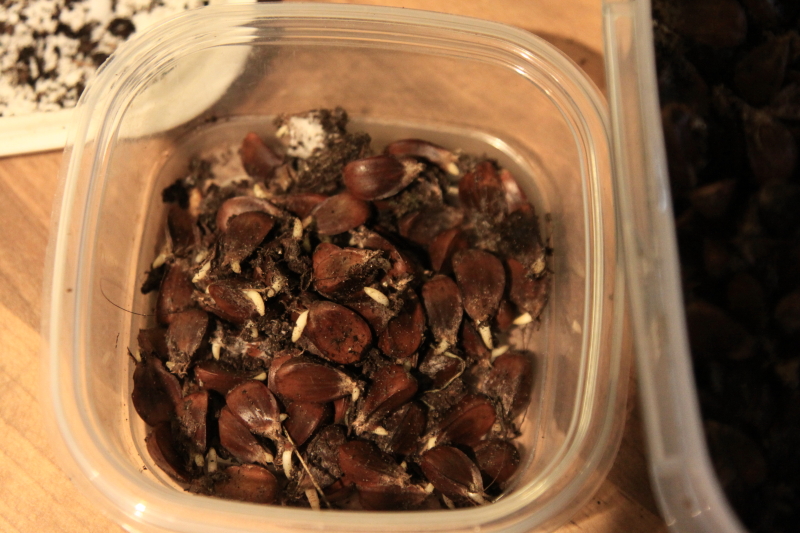
Small box with germinated seeds ready for planting
Some germinate quicker than others so I remove the ones that are growing and place them in a separate container, ready to take them to the wood. One of the biggest problems is rodents, rabbits and even deer. Last year we planted lots of germinating beech seeds in a little plot at the woods and half of them were eaten probably by mice and voles before they even produced their first seed leaves and the rest were eaten almost as fast as they put their heads up above the ground. So this year I am planting them individually where I want them to grow and protecting them from the outset. The technique I am using is this, 1. Select a suitable site ( where the leaf litter is not too deep and it is also not waterlogged) and insert a bamboo cane.
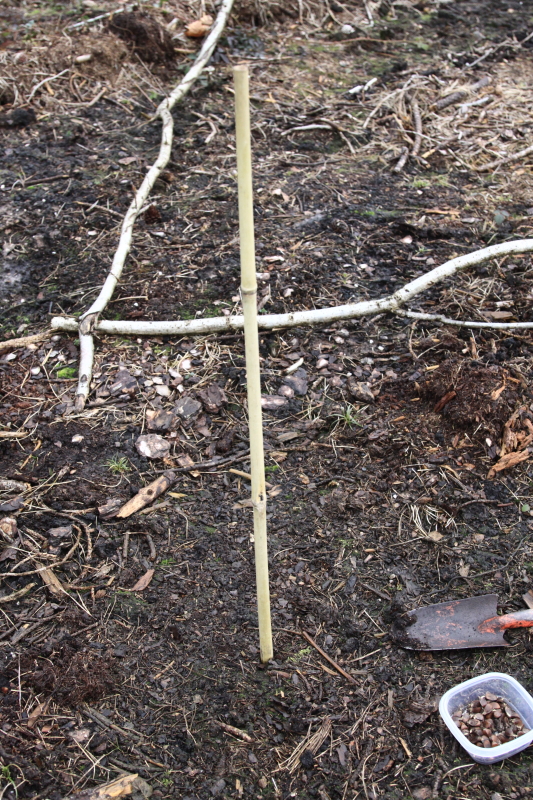
Cane in place
2. Dig a little hole as close to the cane as possible, and place a seed or two into the hole. Make sure the newly emerging root is facing down ( it always seems to fall the wrong way up, like buttered toast, so you have to gently turn it over) Then cover with soil, pressing this down gently.
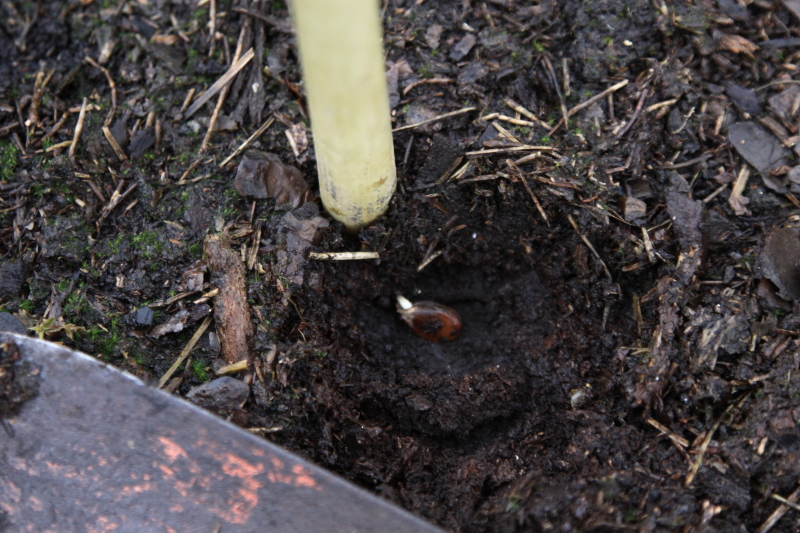
Seed in place
3. Now place a plastic sleeve over the cane and push it down into the soil a little way, taking care not to push it directly onto the seed. The reason for pushing it into the soil is to try to deter small rodents from digging the seed out and eating it.
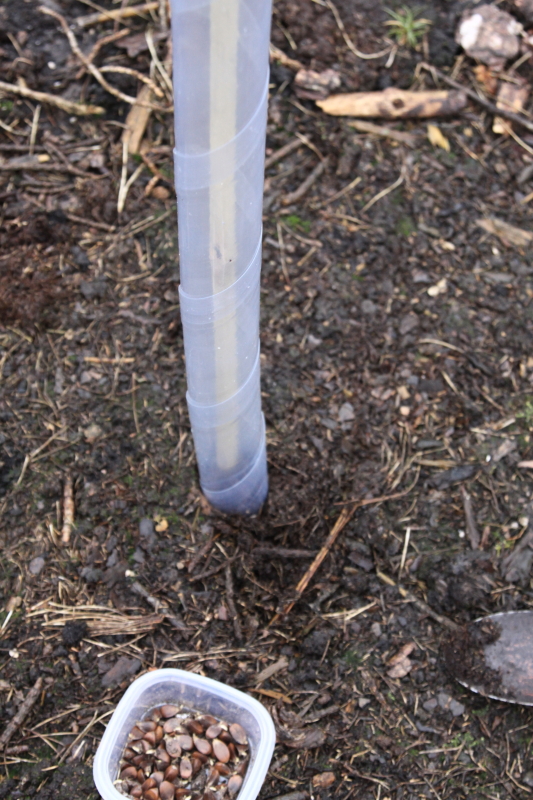
Plastic tube to protect seed
4. I then mark the top of the cane with a small spray of orange paint so that I can distinguish Beech from Hazel which I will be planting later in the year.
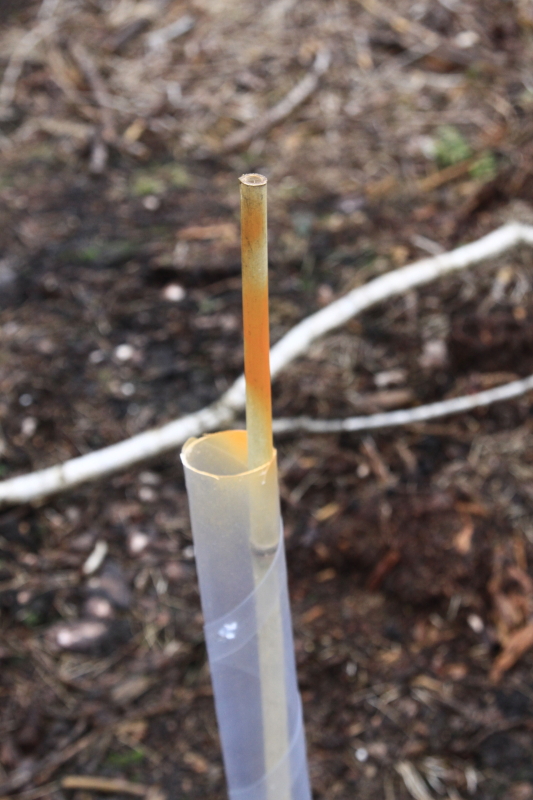
Orange spray paint
5. Repeat the process many many times, wait 100 years and you might have a Beech wood.
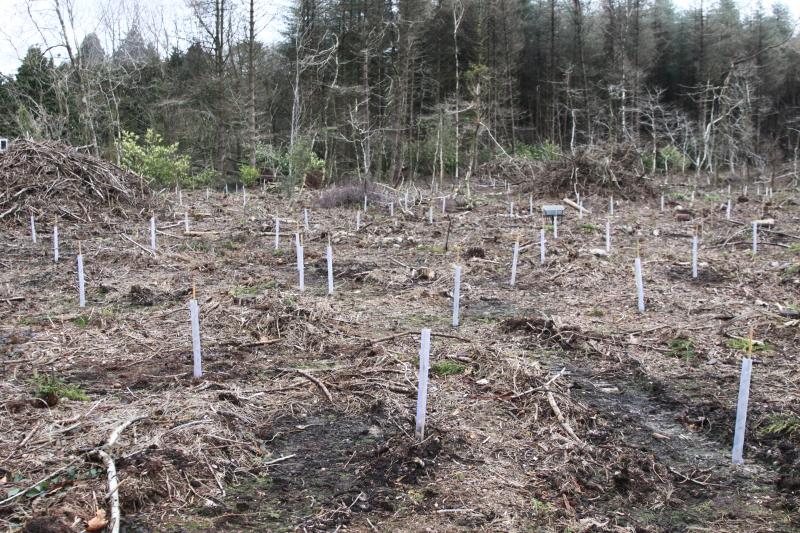
Lots of beech trees….one day?
Whist I was planting the seeds this afternoon it started to snow, It snowed quite a lot and when I finished I took this photo.
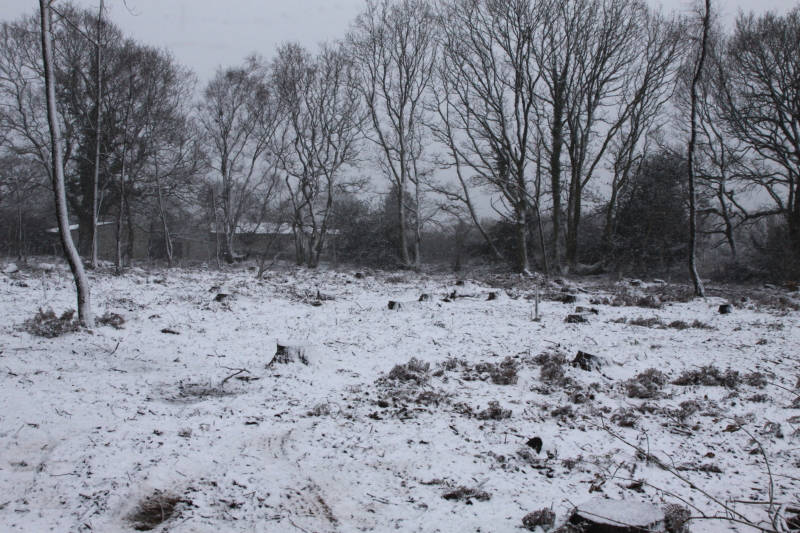
The snow came down


It’s a great photographic record of “in the beginning”. You think you will remember but you don’t and it is very gratifying when you look back. Amelia
Yes , especially because I lost all my photos from the period when we first bought the wood because my computer re set itself and I had not backed up my photos and Anita had not backed up the accounts onto an external source. We are both more vigilant now.
Thank you for posting this. It’s very useful and we will definitely be trying this next year. Do you have any advice on growing oaks? Our main issue is protecting new growth from our voracious herd of fallow deer.
I have added you to the ‘blogs I follow’ list. It’s incredibly useful to follow what others are doing
Our wood blog is at http://www.oldcopse.blogspot.co.uk
Thanks, I will be posting about how my beech seeds get on in due course, hopefully it is good news. Oaks are the easiest as they do not need any pre- treatment. The trick is to collect them before the birds and animals do. You have only a short period of time in Autumn. The first one to fall off the tree are often ones with grubs living inside, so better not to collect them and go for the main crop. Then just plant them and they start to grow almost immediately. Plant them side on not upright. They will need protection as the squirrels will have them over winter and the rabbits in spring when the young leaves are tasty. Good luck By the way last autumn there were no acorns anywhere so this year should be good.
There is a product called ‘grazers’ which is expensive but you dilute it and spray it onto young foliage and it is absorbed and the deer etc find it unpalatable. It needs repeat application every 4/6 months evidently. I have no experience of this but have just seen it at woodland shows. Might be worth investigating?
Congratulations!
I will take your idea to do it with the Mexican beech, since this year was a masting event and I have many beechnuts in the cooler, but I will break your advice and reforest areas in the cloud forest where this endemic and endangered species grows.
Best regards,
Ernesto Chanes. Rodríguez Ramírez
Great and good luck, Some time ago I visited the Cloud Forest in Costa Rica and it was most impressive and memorable.
How has your wood progressed?
It is growing well, I would estimate that about 50% of the trees I planted have survived and are now about 1meter high. There are lots of Silver Birch and I have to chop them back to give the Beech,Oak and Hazel a chance, but they all add to the developing wood.
Hello,
Do you happen to know how long it takes for a purple beech to produce seeds?
We planted a tree from a sapling 5 years ago and it has grown very well. I don’t think I love seen seeds in it yet. Just wondering as I’d like to produce further trees from this one (it was planted for a special occasion).
Many thanks,
Liam
Hi, I would think the same time as for normal beech which will be quite a while, depending on soil and position I would estimate 50 or so years at least.