Tags
Catbrook wood, Grey squirrels, Ninewells Wood, Species seen at Catbrook Wood, squirrel damage, squirrels eating bark, Woodland Management
Not content with eating my nuts, hazel nuts that is, the squirrel has now started to remove the bark from some of the bigger trees, It seems to prefer the beech bark but has also had a go at a few of the oaks.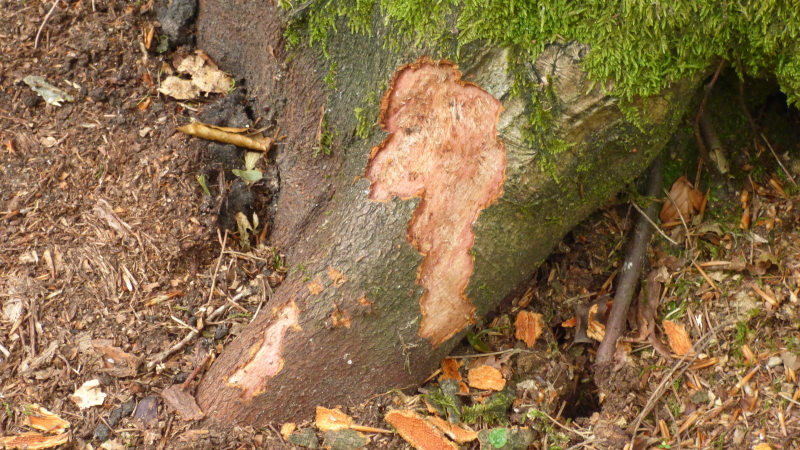
At first I only saw the damage at lower levels so I was not sure if it was squirrel or deer. This is a young oak that has been got at.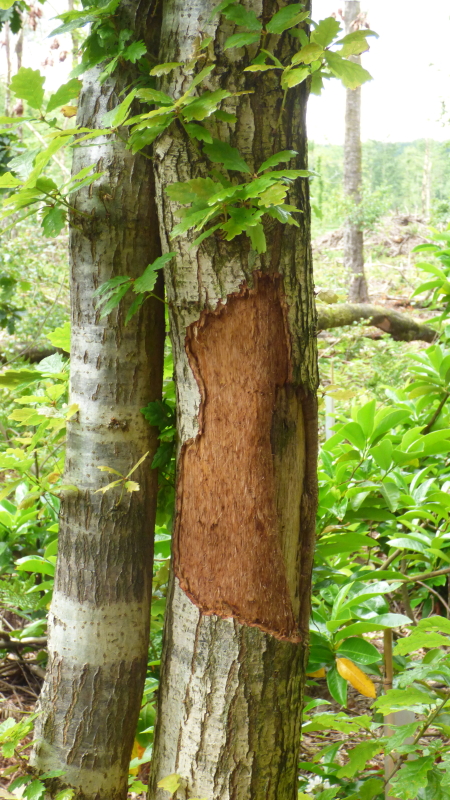
There is also a small amount of damage to young rowan shoots.
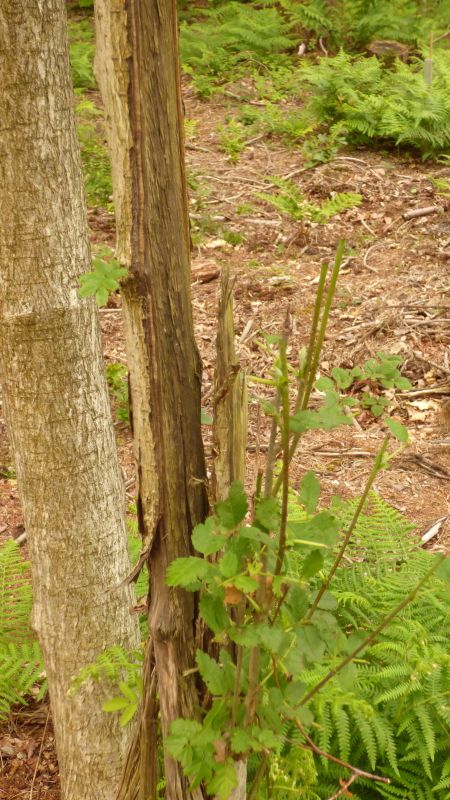 I then saw some damage high up in the Beech trees so this ruled out deer. In fact so far this year I have not seen any evidence of deer visits, nothing on the cameras and no footprints or droppings.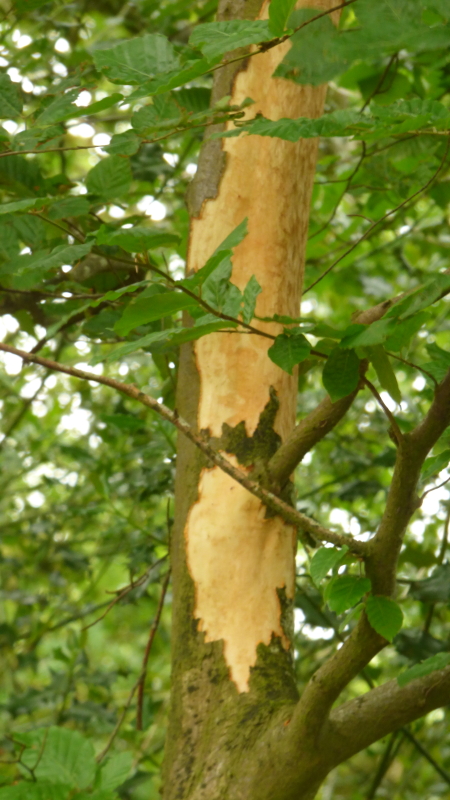
You can actually see their teeth marks if you look carefully.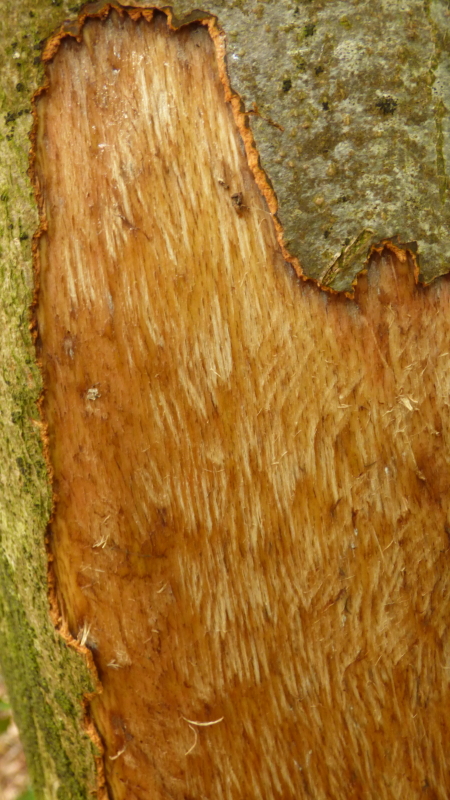
There is also something else going on which is that something has been digging away at the base of the old Corsican pine stumps, I suspect this is also squirrels, but why they are doing it I do not know. At least that activity is not doing any harm.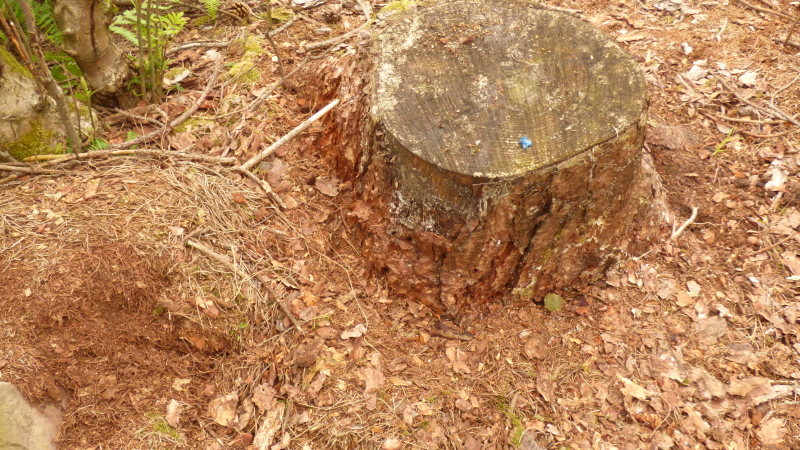
I am hoping that a forthcoming camping trip by my son and grandson will result in the squirrel getting his come upence. However I fear the squirrel will be too quick for them or will not show at all.
They were not successful, but today I was over at the woods and did see a very nice stoat, fully grown with cream underneath and a black end to the tail, chestnut-brown on top. Lets hope he gets a squirrel.


Hee hee, welcome to the Skwerl Haters Club. We’ve had about 70 hornbeams and a couple of small leaf lime trees attacked in a similar way this year. Loads of pot holes dug in the ground too. Forestry Commission document “fcpn004” has some useful information about all this. They are little buggers aren’t they!?
Yes, I may take my air rifle up to my wood and sit quietly for an afternoon or evening and see if I can get one or two. It probably wont make much difference but it would make me feel better.