Tags
Cannabis, East Anglian field study centre, Eupatorium cannabinum, Hemp Agrinomy, Ninewells Wood, Woodland flowers, Woodland wildflowers, Wye valley woodlands
Hemp Agrimony is a tall dominant flower found in damp shady woodlands and woodland carr habitats. It can grow up to 2M tall and has pink/purple flowers which form a sort of platform rather like an umbeliferous flower. It flowers later in the year, August and September.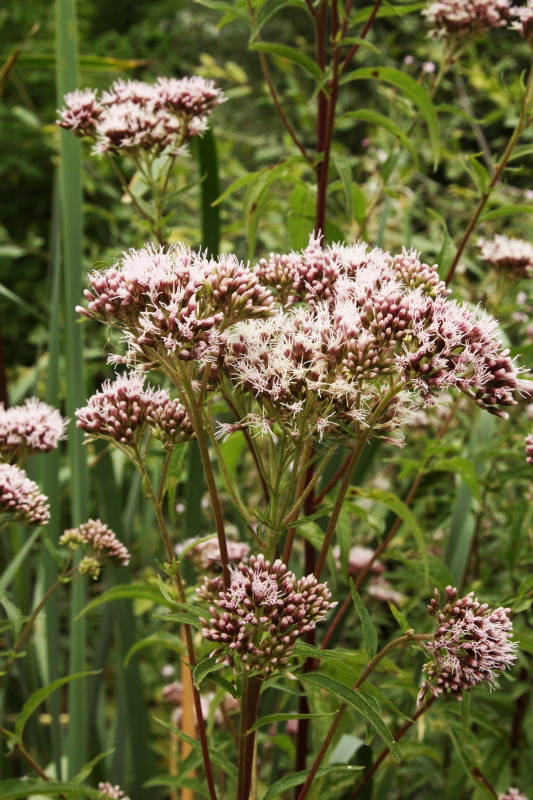
These plants presumably produce a lot of nectar in their flowers as they are very popular with large numbers of insects.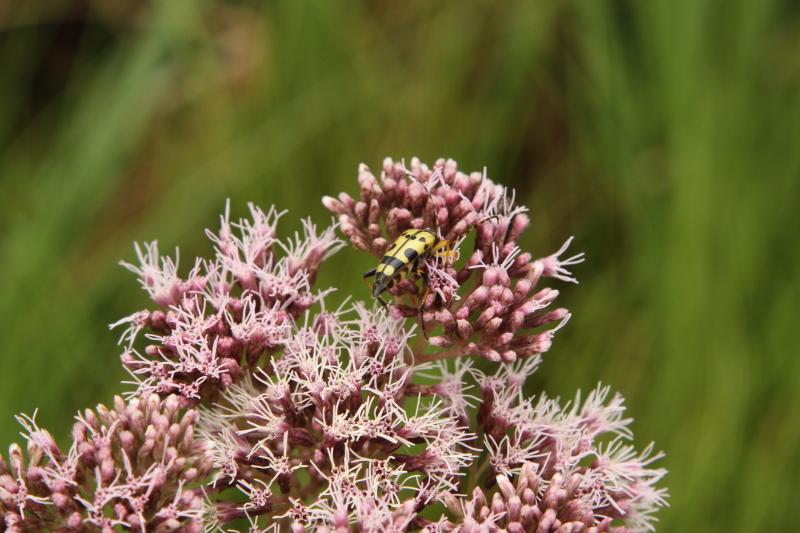
The name Hemp comes from the fact that their leaves somewhat resemble those of the cannabis plant …also called hemp. When I ran a field study centre in Norfolk, I recall a time when two students carefully asked me about a plant they had seen growing at Foulden Common. These two students were fine, but could be described as a little bit ‘jack the lad’ anyway after a day at the common carrying out their ‘A level’ individual investigation they returned to the centre and said ‘hey, Alan there is this plant growing over the common where we are working…. there is loads of it, you know its …. well is it?’ ‘Yes’ I said ‘Hemp’ ….. ‘Wow’ they said. ‘There is stacks of it, we could take loads of it back to London, it would be worth a fortune’ ….. ‘Yes’ I said, but you might get a bit roughed up when all your customers got from it was a bad cough. This is Hemp Agrimony and it has leaves that look like Cannabis but you can smoke as much of it as you like and it will not have any effect.
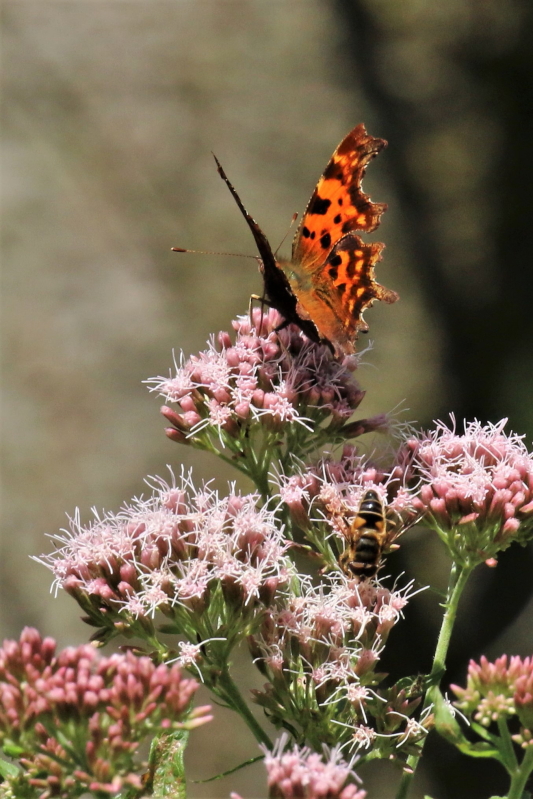 There is quite a lot of this in Ninewells wood and all through out the Wye valley area. It often grows on the edge of forest rides and does attract lots of insects and particularly butterflies. In Ninewells wood, this autumn (2017) I have seen Comma, Small Tortoiseshell, and Fritillaries visiting the flowers.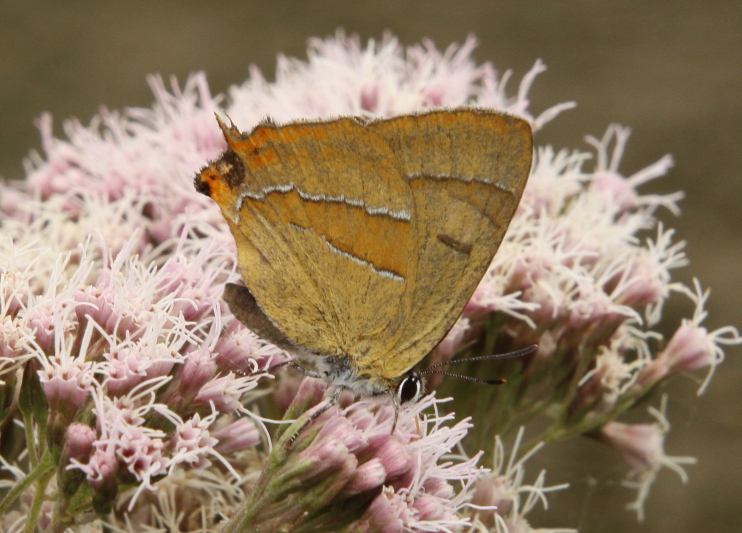
The photos below show a particularly rare butterfly on Hemp Agrimony, it is a Brown Hairstreak, however I took these photos in France.
The plant is in the daisy family, and most closely related to Asters. Each individual flower is like a little daisy with long thin petals. The genus that it is in contains about 30 species but this is the only one found as native in Europe, all the others are far eastern or north American..
As with so many wildflowers it has been used for centuries as a herbal remedy.The genus name Eupatorium can be traced back to the ancient Greek king Mithridates Eupator (120-63 BC), who apparently was the first to use species in this genus. It has be used to combat all sorts of ailments, however being Mr Cynical, the fact that it has been used does not mean it has been successful. However it probably does have some laxative powers, should you need them.
To check out other wildflowers found in the woods of the Wye valley and Ninewells wood click Woodland Wildflowers of the Wye valley and Monmouthshire.

