Tags
birding, birds, Birds at Ninewells Wood, Buzzard longevity, buzzards, Catbrook wood, Monmouthshire woodlands, nature, Ninewells Wood, photography, wildlife, Wye valley woodlands
Only one visit to the wood this week which was Thursday, it had been several days since my last visit so the feeders were empty. I filled them up and scattered some nuts and offerings for the Foxes and Buzzards and retired to my hide.
The feeders were quiet for a time, not surprising as they had probably been empty for a day or two, but fairly soon I heard the distant mew of a Buzzard, bit by bit the cries got louder and it sounded like there were two of them. Slightly different notes and also it sounds like one is responding to the other so you get two mews close together then a gap then another two.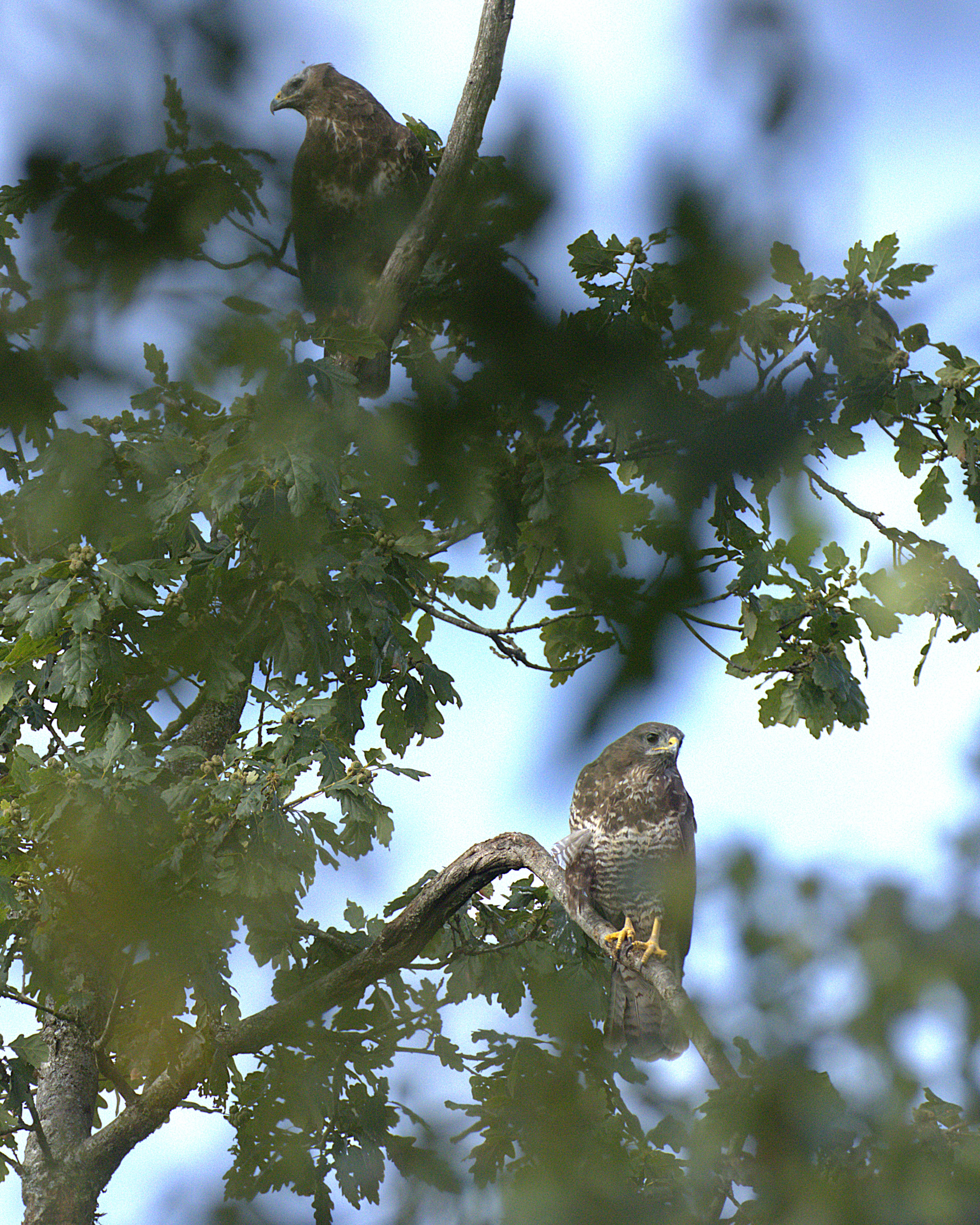
The calls sounded quite close and there is a bigish Oak not far in front of the hide, I scrunched down so I could see up into the upper branches and there were two Buzzards sat there. Now it can take a long time before they deign to fly down and avail themselves of the offerings set out for them. Not this time after about five minutes one came down. I assumed it was one of the two young ones we had seen on the ground some weeks earlier, but not sure. 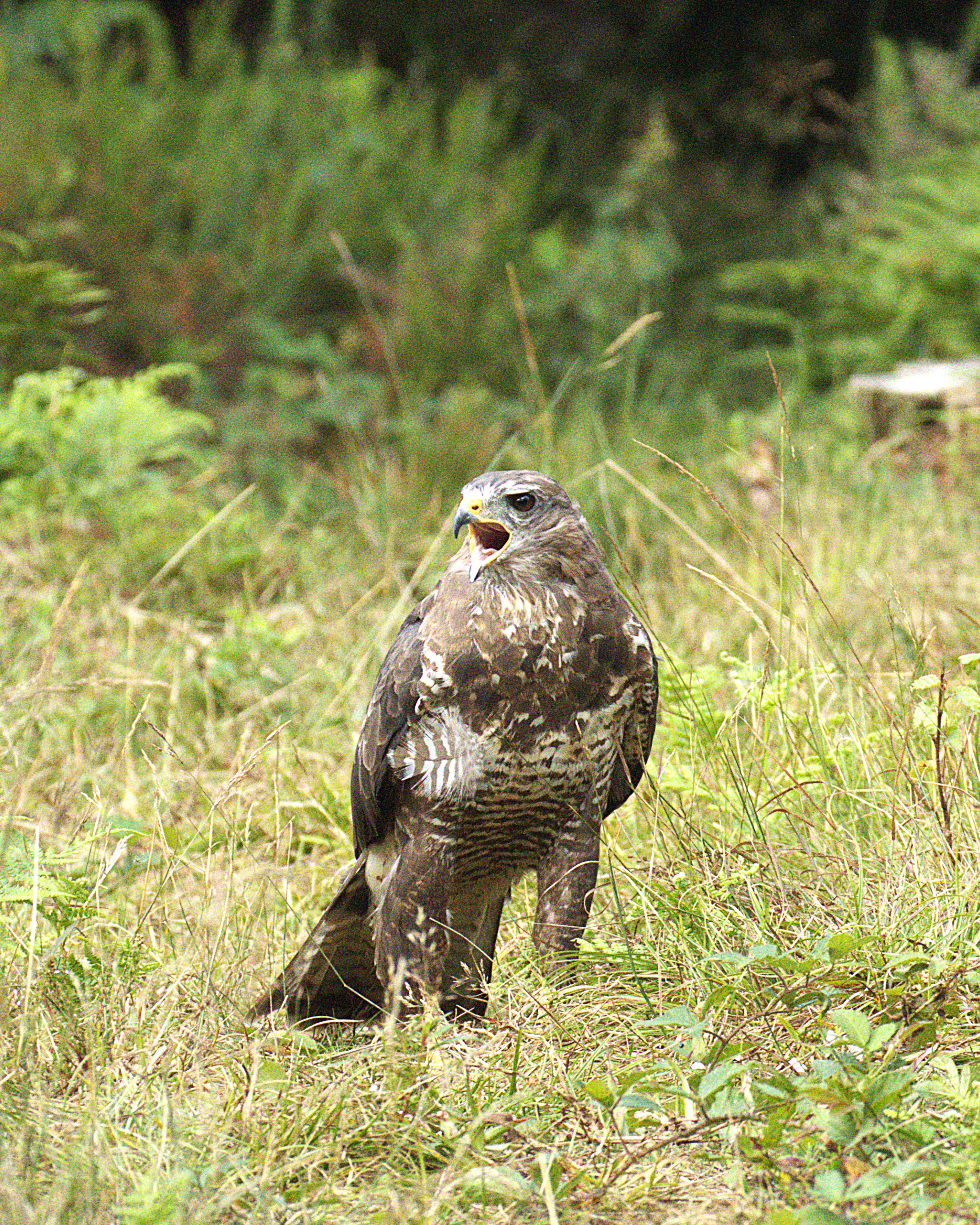
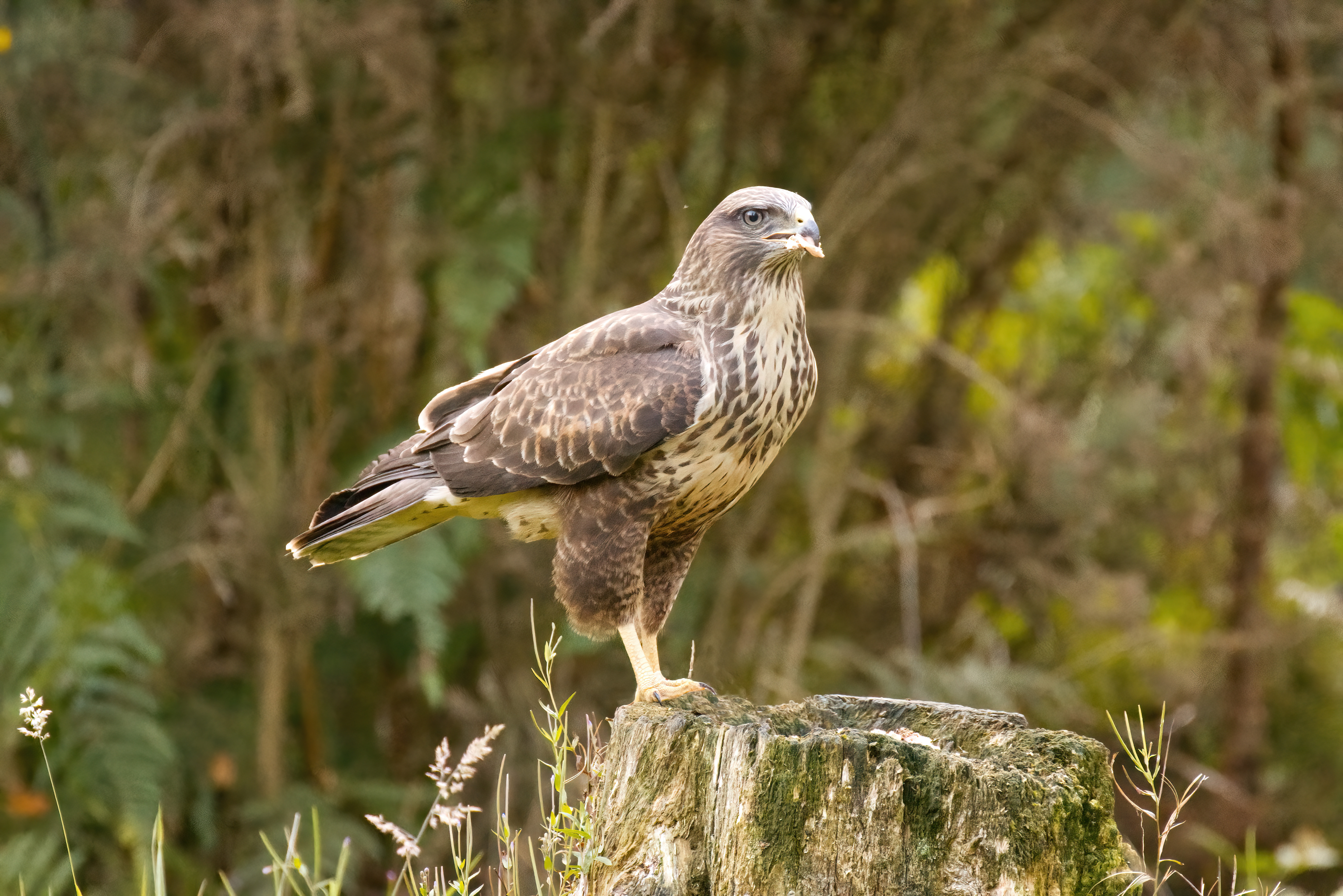
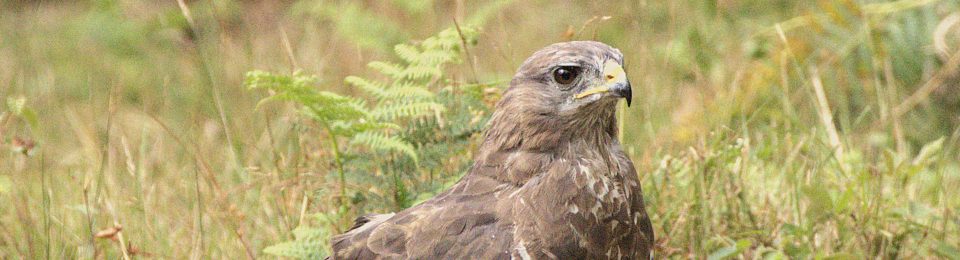
However it was not there long before the other one flew down and the first one then left. I assumed this would be the second youngster but not so. This was my old friend Halfeye. She ( I think it is a she) stayed on the ground for a good 20 minutes and seemed quite happy to share the food with several Magpies that approached very close and she did not seem at all bothered.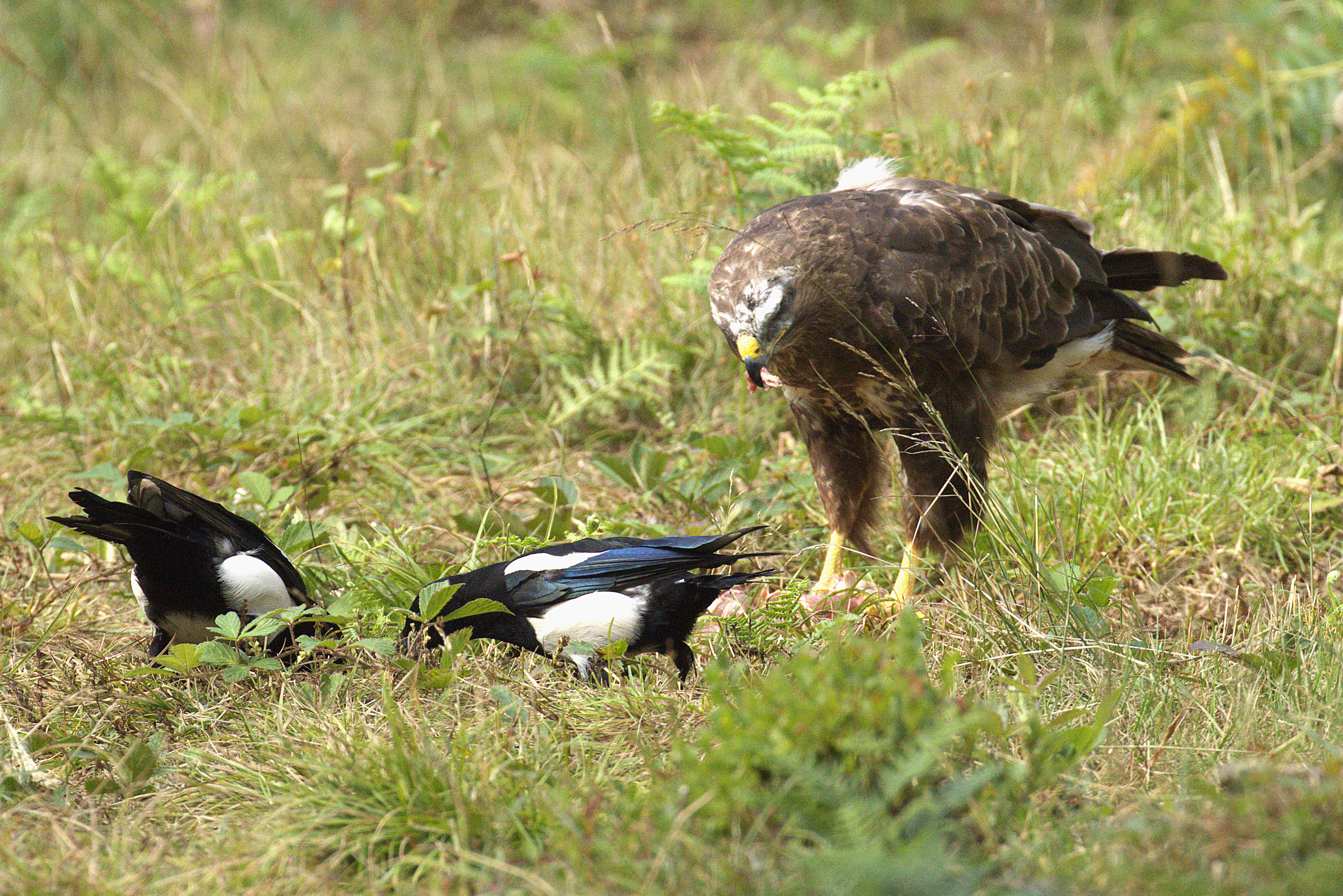
I did hear the calls of a Raven and when that happened Halfeye did cock her head and looked cautiously skyward, however the Raven never showed. I was surprised to see that Half eye was sporting quite a lot of whitish feathers on her head and particularly around her damaged eye. It almost looked as if she was going Grey. Nothing wrong with grey, some say it makes one look quite dignified! Anyway, this prompted me to look up how old Buzzards live and a bit more about their life style, this is what I found out.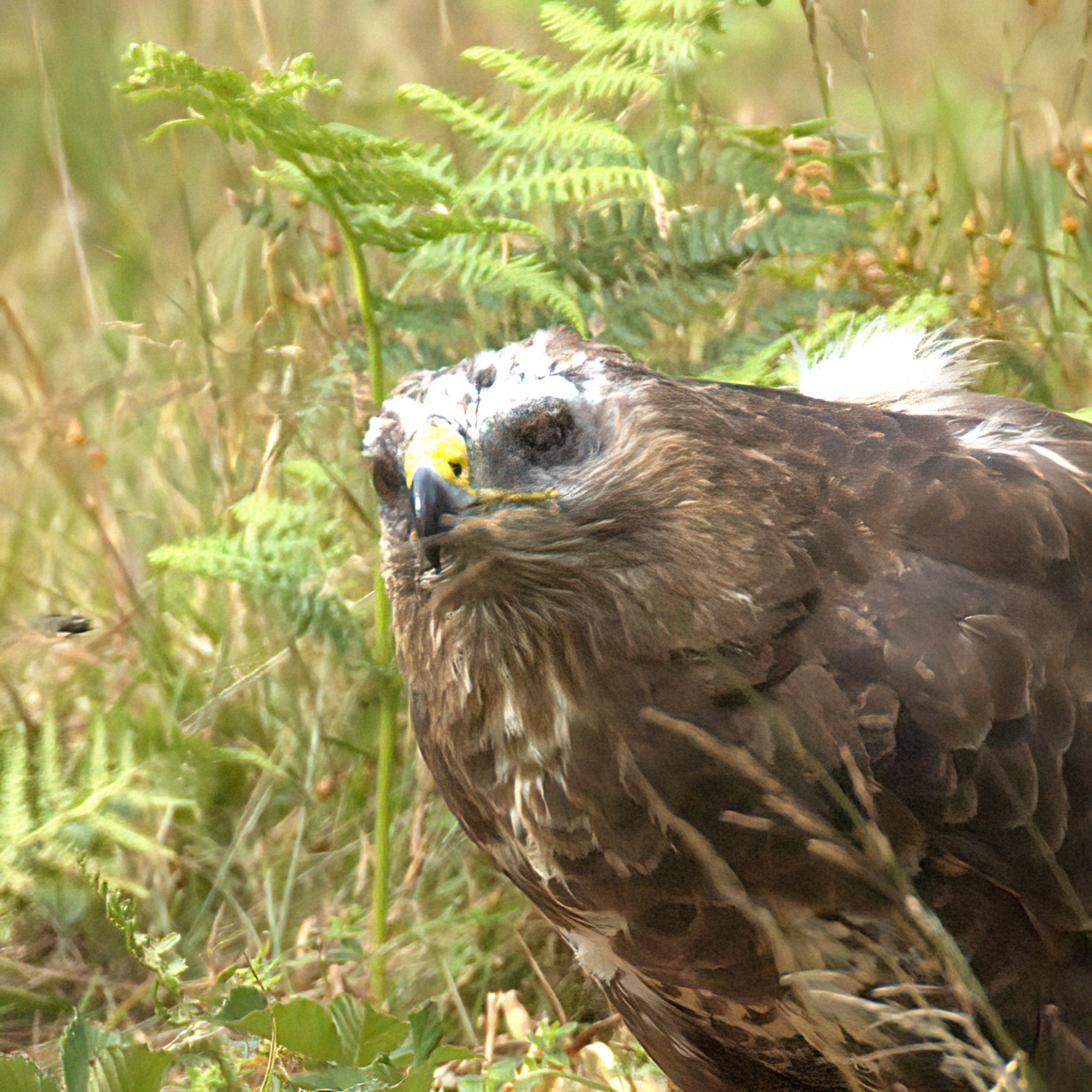
Mating begins in early spring and a pair of buzzards will stay together for life. The male performs a spectacular aerial courtship display known as ‘the rollercoaster’, in which he ascends in the air and then plummets downwards, twisting and turning in a spiral pattern before rising up and repeating the process. Bbuzzards build large nests, up to 1 metre across and 60 cm deep, high up in mature trees, usually near the edge of a wood. The nest is made out of branches and sticks and is lined with green vegetation. In treeless parts of the country buzzards will nest on small rocky crags, or even on sand dunes.
The female lays two to four eggs at intervals of two to three days each and she incubates them for about 35 days. When the chicks hatch they are brooded by the female for about three weeks, during which time the male brings food. The chicks are covered in brownish-grey down at first, and feathers begin to appear after 12 days. It is rare for all the chicks to reach maturity, as some may be lost to predation, or the smallest may sometimes be trampled to death by the larger chicks. Fledging takes place after 50-60 days, and the adults continue to feed the young birds for another six to eight weeks. The common buzzard reaches sexual maturity after three years, and an individual bird can live for up to 25 years. Average is 12-20 years and the oldest record from ringing is 30 years and 5 moths.
I also discovered that young Buzzards have a yellow eye with a black dot in the centre (the pupil) and that over the course of three years the yellow becomes progressively more brown so that by the time they are adults the eye appears almost uniformly dark, maybe slightly lighter around the outside with the darker pupil in the centre. So this means that both Buzzards visiting on Thursday were adults presumably the male and the female.
So this photo which I took last summer is presumably, based on eye colour, a young one.