Tags
Ancient Woodland, Common Spotted Orchid, Ninewells Wood, Ninewells Wood species list, Woodland wildflowers
Last Sunday ( 7th June ) we went up to the wood for our normal Sunday morning amble round Ninewells wood. We do various circuits which include our section of the wood but covers other areas as well. Just close to the entrance to our section of the wood there were two orchids in flower. they were the Common Spotted Orchid so hardly a rarity but an orchid none the less.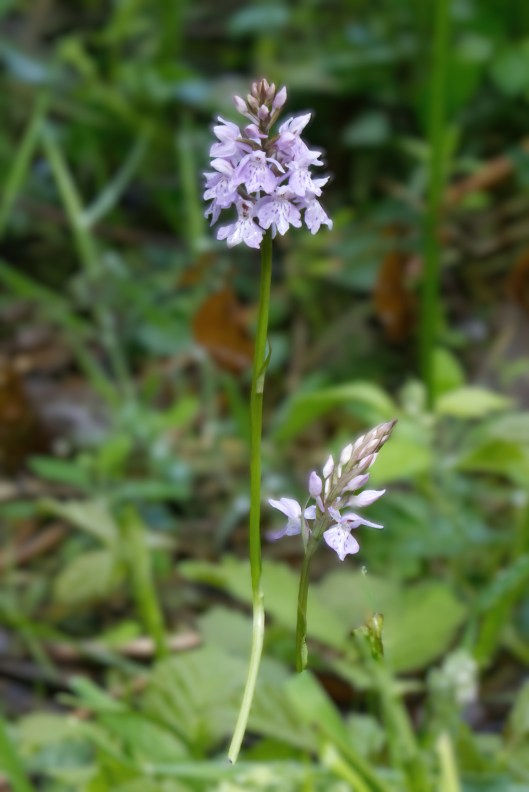
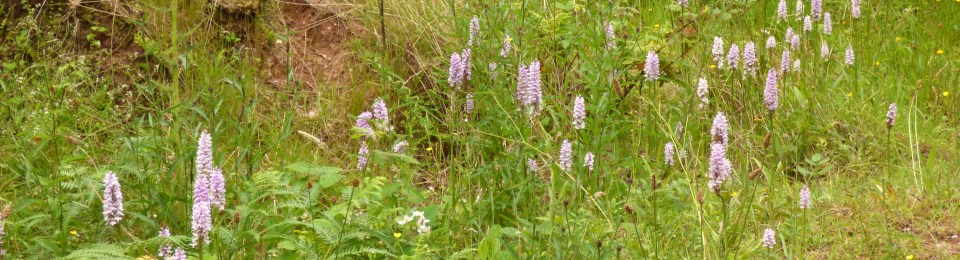
This is a first for our section of the wood. Now on the other side of Ninewells wood where there is a small public car park there is a wide forestry track leading through the area of the wood that is managed by Welsh National Resources, and along the side of this track hundreds of Common Spotted Orchids grow. They were limited to one side of the track but a few years ago the forestry people improved the track, because they wanted to get lorries along it in conjunction with some felling operations. This track improvement involved some levelling and the addition of a bed of hardcore. I was concerned that their activities would affect the orchids and it did, the numbers went down but as the levelling involved moving topsoil from one side of the track to the other side it did result in some orchids appearing on the other side. Now it has more or less recovered and there are a good number on the left hand side and a few dotted about on the right hand side.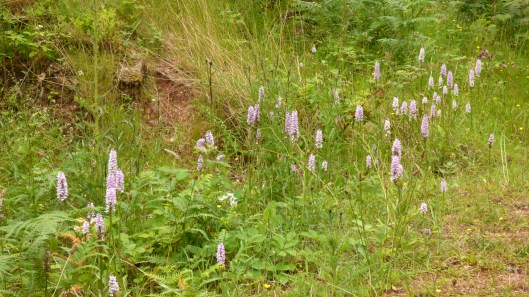
So what has all this got to do with the new orchids in my patch of the wood? Well about five years ago I picked about five seed heads from the side of the track, I was careful to pick seed heads that were ripe ie going brown and just starting to open. I carefully placed them in a paper bag and took them to my bit of woodland. I then tied some string round the stalks and attached it to a low branch near to the entrance. The idea being that the seeds would gradually be released and might result in orchids in my section of the wood.


I have done a similar thing with bluebells. there were several patches of bluebells growing in our wood when we bought it, but these were confined to the edge. So with the bluebells I just waited till the seeds were ripe and then shook them into a paper bag and when I had a reasonable amount I took the bag to another area of the wood and planted them. The planting was not that precise, I simply made a scrape with a spade, dropped a few seeds in and then scrapped the soil back and stamped it down. Again this was some years back but I do now have small groups of Bluebells in lots of locations throughout the wood, I assume this was the results of my efforts. Check this out at Bluebells.
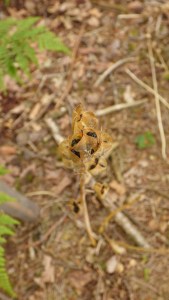
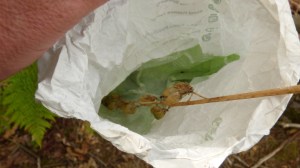
The orchids now growing in our wood are only about 10 yards from where I attached the orchid seed heads to a branch some years back, so I am guessing that they are a direct result of my activities. The thing about orchid seed is that it is incredibly small, more like a spore than a seed. So one seed head will have literally thousands of seeds in it and they can blow on the wind some distance. Being so small they have a very small chance of germinating successfully, but as there are so many I suppose it compensates, swings and roundabouts. The other complication with establishing orchids is that they need a fungus in the soil so that they can form a symbiotic relationship. So after the tiny seed germinates the next stage is that it has to encounter a fungus fairly quickly and it is not any old fungus it has to be a certain species, then the fungus keeps the developing orchid alive and eventually it can produce a leaf and some roots and then the two work together and some years later the orchid is big enough to flower.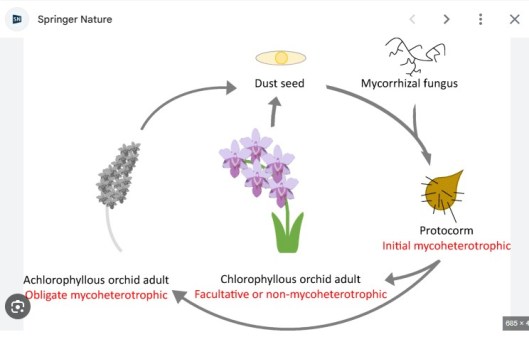
So a new species for my section of wood, and a great joy to me, its not rare and they do live in other parts of Ninewells but my aim with my little patch is to improve it, increase the biodiversity and restore it to what it was once upon a time, an ancient open woodland/heath. Work in progress but progress none the less. For a full list of all the species I have seen in Ninewells wood click Species list.

