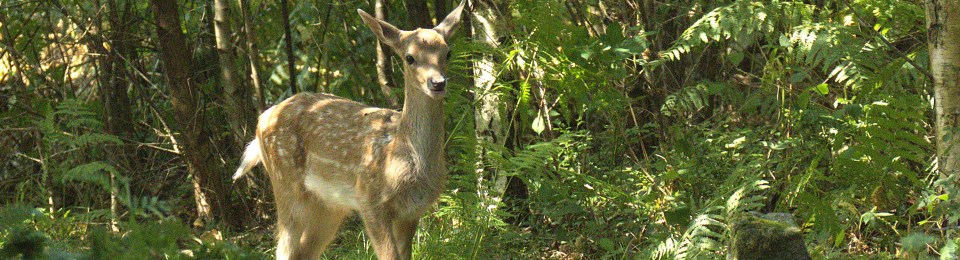
Yesterday ( 14th July 2026) I was enjoying a bit of quiet time in the wood when a little Fallow deer fawn wandered into view. I guessed that mum would not be far away and after a couple of minutes she did come into view.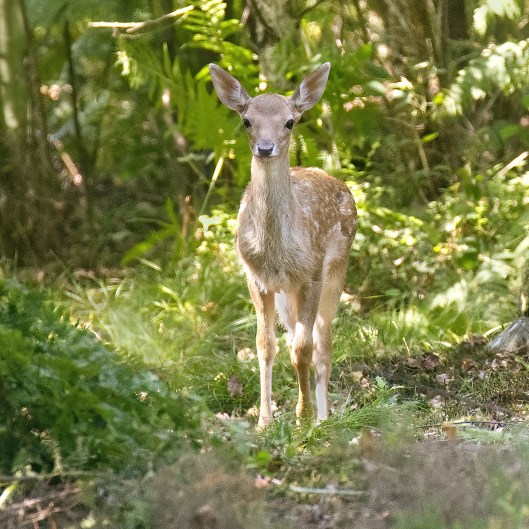
Fallow deer were first brought to Britain from the western Mediterranean by the Romans and they were kept within enclosures known as ‘vivaria’. Genetic analysis has shown that these Roman fallow deer went extinct in Britain following the collapse of the Roman Empire.
It was then in the 11th century that fallow deer were reintroduced, this time from the eastern Mediterranean.
Initially, they were kept in parks as rare exotica but gradually their populations increased and they became an important source of venison for aristocratic tables. As the fashion for deer parks declined in the 15th century, many parks fell into disrepair and these medieval escapee deer are the foundation of the free-living population in Britain today.
Whilst non-native, fallow deer are considered naturalised and are locally abundant and increasing.
They are widespread in England and Wales, but patchy in Scotland, inhabiting mature broadleaf woodland with under-storey, open coniferous woodland, and open agricultural land. They prefer to graze grasses although they will take trees and dwarf shrub shoots in autumn and winter.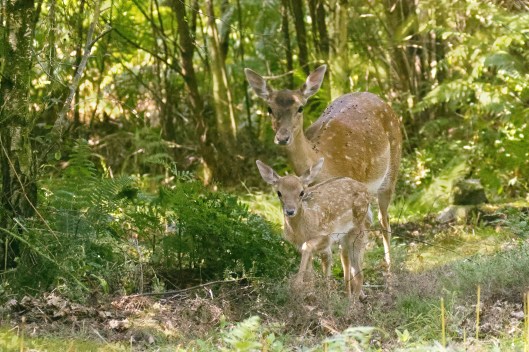
My pair spent some time in view, mostly eating the grass but also reaching up for some Silver Birch leaves. The young are born in June or July so this little chap could not have been much over 6 weeks old and possibly quite a bit less than that.
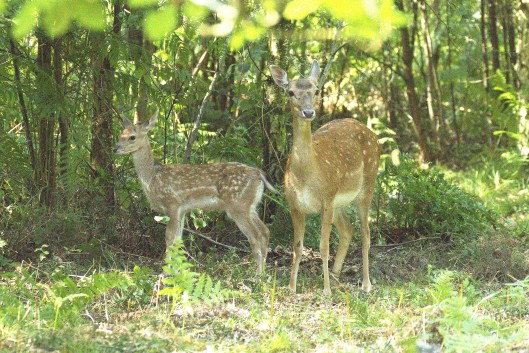
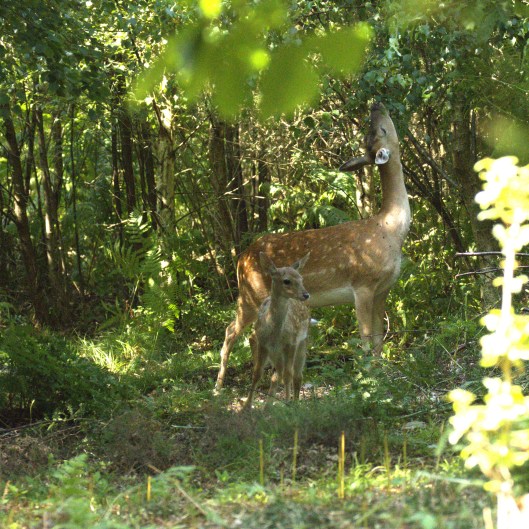
Nice to see and quietly watch them for about 15 minutes as they made their way through our wood.
 Ninewells Wood